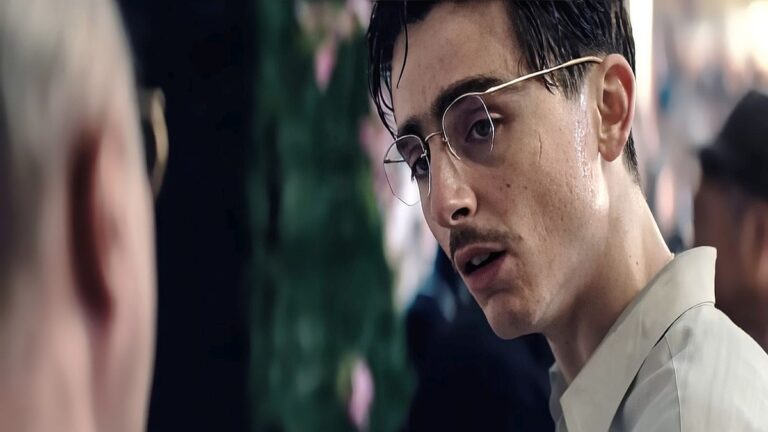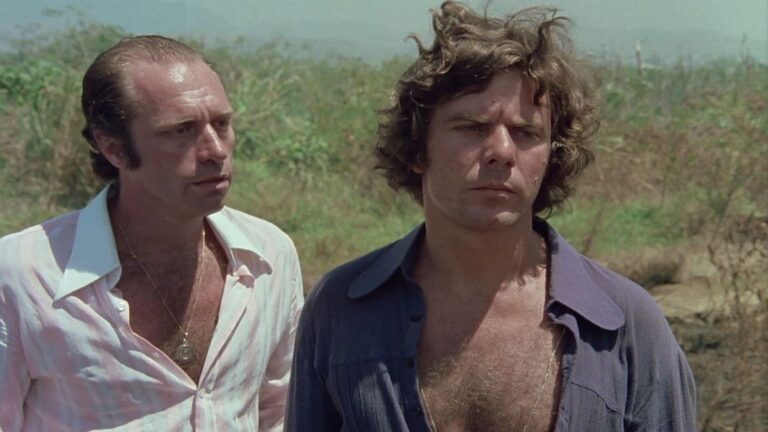
The Final Programme (1973)
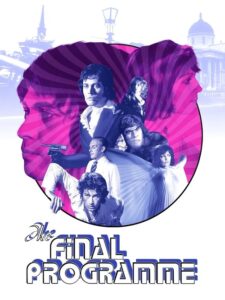
The Final Programme
Sitting between The Abominable Dr. Phibes (1971) (and its 1972 sequel) and The Devil’s Rain (1975) is this psychedelic science fiction curiosity by director Robert Fuest. The Final Programme has the dubious distinction of being the only feature-length film adapted from a Michael Moorcock novel; specifically, the 1968 book that introduced his character Jerry Cornelius. Moorcock was reportedly unhappy with the adaptation, and to date, no other screen versions of his work have materialized.
THIS REVIEW CONTAINS MINOR SPOILERS
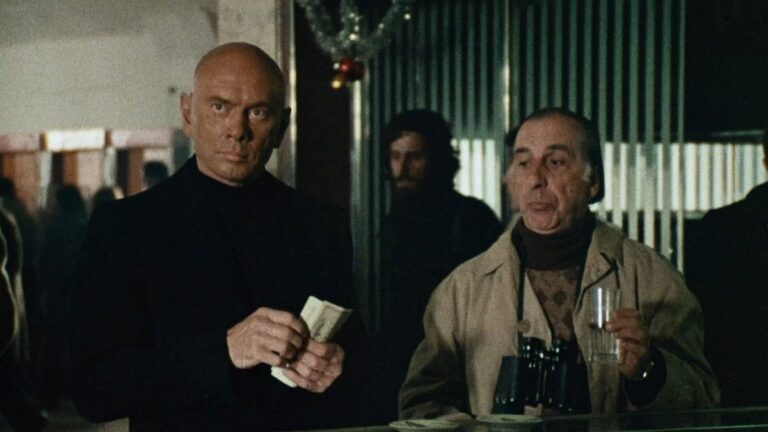
Jon Finch, fresh from the lead in Polanski’s Macbeth (1971), plays Jerry Cornelius, the son of an award-winning scientist who has developed blueprints for a form of immortality called the “Final Programme.” After his father’s death, a group of scientists led by the eccentric Dr. Smiles (Graham Crowden) pursues Jerry, hoping to acquire the microfilm containing these plans, which they believe is hidden at the Cornelius family estate. Jerry (himself something of a scientist) has no interest in the programme. In fact, he wants to blow up the estate entirely. When reminded that his brother Frank (Derrick O’Connor) and sister Catherine (Sarah Douglas) still live there, he coolly replies that he’ll warn Catherine first, but Frank’s presence is all the more reason to destroy the place.
To persuade Jerry, the scientists recruit the enigmatic Miss Brunner (Jenny Runacre), a woman with unusual talents that extend beyond mere intellect. There’s something distinctly unsettling about her, suggesting she operates by rules entirely her own. She becomes both catalyst and wild card in the pursuit of the Final Programme.
This is the basic setup for a film that was panned by critics and ignored by audiences upon its 1973 release. Yet revisiting it now, The Final Programme deserves a more generous appraisal. Yes, it at times feels chaotic (and chaos is precisely what critics accused it of in 1973), but what was dismissed then as confused and moronic now reads as something more adventurous and uncompromising. Despite being in conflict with Moorcock’s source material, Fuest fully commits to his own vision. He doesn’t hold back. There is a certain fearlessness that comes through from the screen.
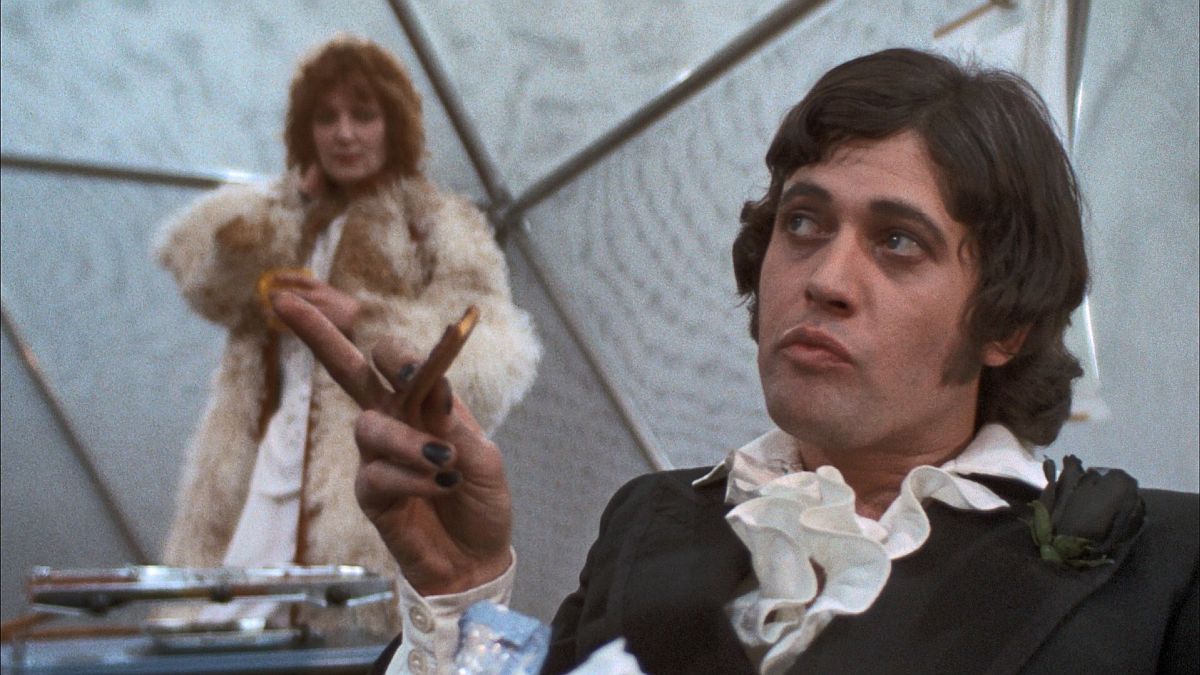
Consider the film’s visual audacity. Fuest bathes scenes in saturated primary colors and pop art aesthetics that feel more like album cover art than traditional cinema. The Cornelius estate itself is a fever dream of mod furniture and geometric patterns. When Jerry, Miss Brunner, and the scientists finally venture into the house to confront Frank, the sequence plays out like a surreal nightmare, with Frank depicted as a debauched maniac presiding over a gothic horror show. Fuest doesn’t ease the audience into this tonal shift, he plunges headfirst into it.
Or take the film’s ending, which embraces full-blown absurdism rather than conventional resolution. The Final Programme‘s conclusion is deliberately provocative and strange, refusing to provide easy answers or satisfy genre expectations. A more commercial director would have softened these edges, but Fuest doubles down on the film’s weirdness, creating something that may baffle but never bores. This commitment to an unapologetic vision is what makes The Final Programme worth reconsidering.
Bonus: Patrick Magee, who played Frank “More Wine” Alexander in A Clockwork Orange (1971), the man whose house Alex and his droogs invade and whose wife they assault, makes an appearance here as Dr. Baxter (a scientist not formally associated with the other group, but who has an interest in the contents of the microfilm for commercial purposes). Perhaps not coincidentally, he offer a glass of wine to Frank in one of his scenes.