Black Gravel (1961)

Black Gravel
Helmut Käutner’s postwar crime drama explores the moral vacuum left in a society trying to rebuild itself while refusing to confront what it has just lived through.
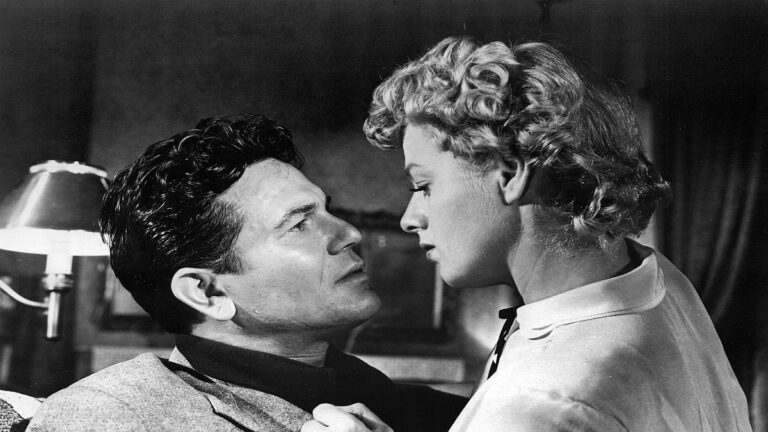
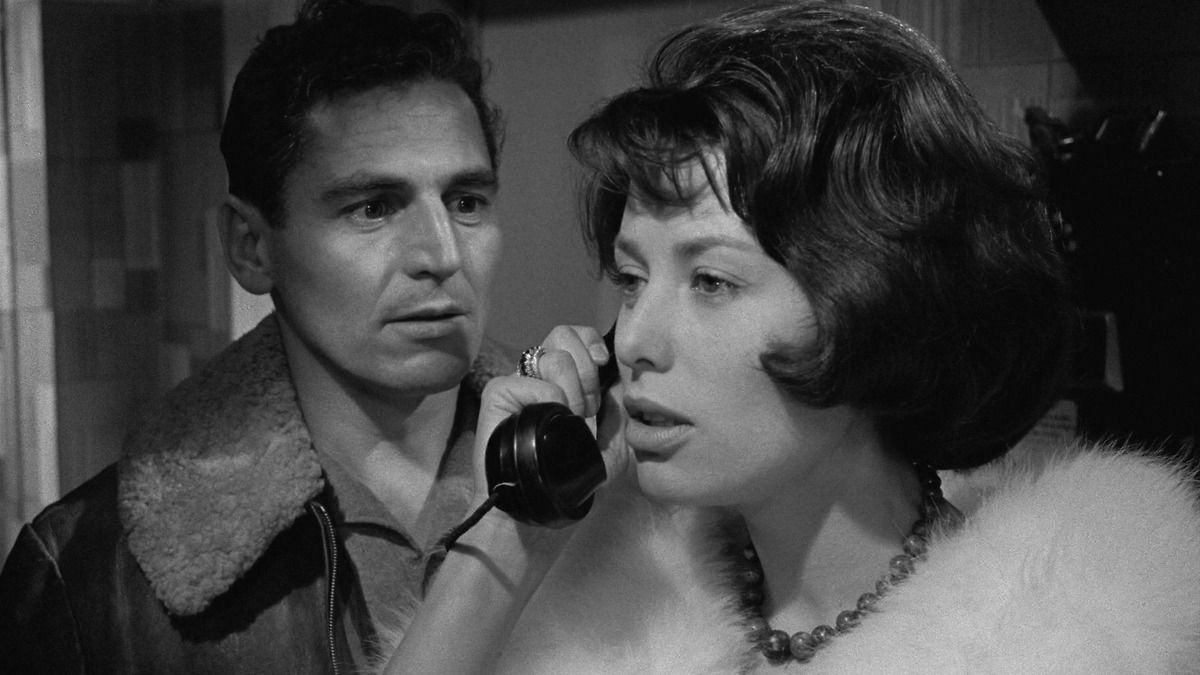
The story unfolds in a small West German town transformed by the presence of a nearby American airbase. The economy thrives on black-market deals, prostitution, and quiet compromises that everyone pretends not to notice. At the center of this murky ecosystem is Robert Neidhardt (Helmut Wildt). He’s a truck driver, a hustler, and a man who has learned to survive by bending every rule in sight. When an old flame, Inge (Ingmar Zeisberg), reenters his life (now married to a U.S. officer) his carefully maintained detachment begins to come undone.
What makes the film so gripping is its refusal to offer easy judgments. Käutner paints a portrait of a community where guilt is spread out and responsibility is shared, even when no one wants to claim it. The cinematography reinforces this moral ambiguity: the gravel pits, industrial yards, and nighttime roads feel harsh and alien, as if the landscape itself is complicit. There’s a rawness to the film that feels contemporary, especially in its willingness to expose the prejudices simmering beneath the surface. The original cut, long suppressed, includes scenes that confront antisemitism directly, an uncomfortable yet essential part of the film’s potency.
The performances are uniformly strong, but it’s the atmosphere that ultimately defines Black Gravel. Every interaction feels transactional, every gesture tinged with desperation or self-interest. Even moments of tenderness are shadowed by the sense that they can’t last. The film builds toward a conclusion that is bleak without being ostentatious, the kind of ending that feels tragically inevitable.
For anyone interested in postwar German cinema, a crime drama that pushes against the boundaries of the genre, or stories that explore the moral gray zones people inhabit when survival becomes the priority, Black Gravel is a noteworthy and deeply resonant work. It’s a film that doesn’t just depict corruption, it asks how much of it we’re willing to tolerate.