Gone in 60 Seconds (1974)

Gone in 60 Seconds
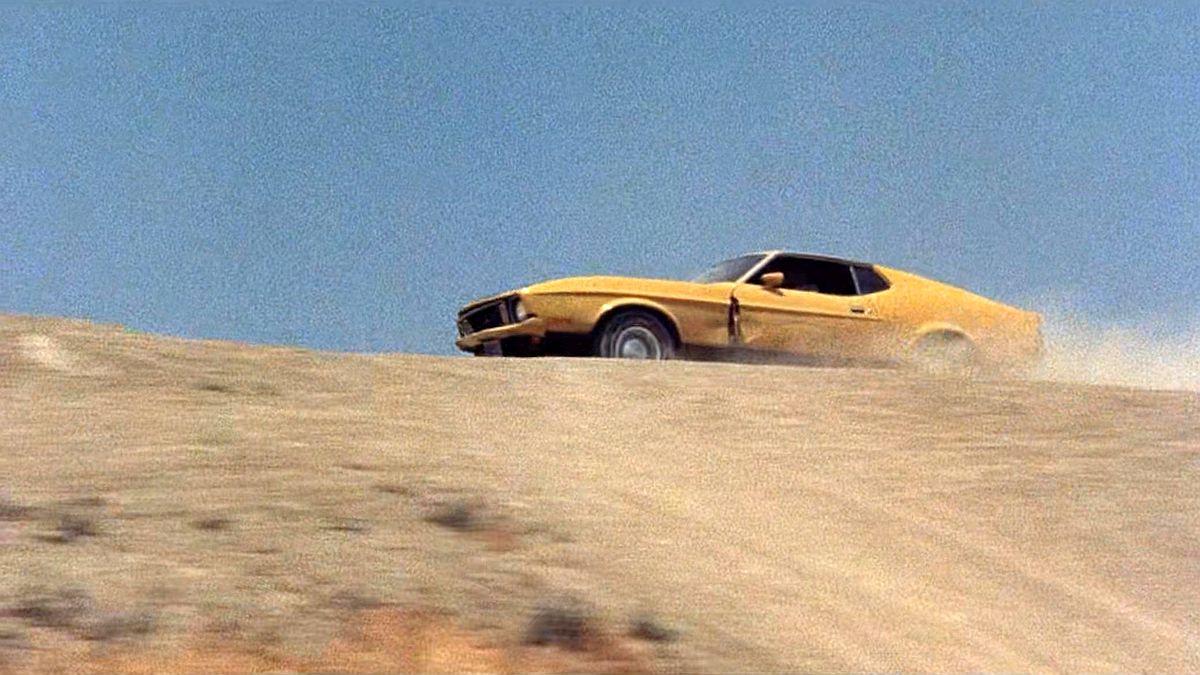
A carsploitation film noted for its extended (40-minute) continuous car chase scene; the longest in film history. An ode to the 1973 Ford Mustang Mach 1 that was the only “actor” listed in the opening credits (as “Eleanor”). Although, the vehicle used in the film was a 1971 Mustang Sportsroof dressed up to resemble the ’73 Mach 1.
The plot is sparse and uncomplicated. Maindrian Pace (Halicki) is an insurance adjuster who moonlights as a chop shop owner involved in a car heist scheme with his partners. Upon meeting the head of a drug cartel, Pace receives an unusual request to steal 48 cars from a list provided by the drug lord to be delivered in five days. The job pays well. Two hundred grand up front, and another two hundred upon completion. Pace and his crew take the job.
Filmed in the wild and woolly days of independent cinema, when the stunts were real and genuinely dangerous. No green screens or CGI here. In fact, Halicki himself was hospitalized after his character slammed into a light pole at 100 mph on Highway 11. That was an actual accident – one of several that were kept in the final cut. It should be noted that fifteen years later, during the filming of Gone in 60 Seconds 2, Halicki met his death on set when a cable attached to a water tower set up for a stunt sequence snapped, severing a telephone pole that landed on Halicki. He died on the spot.
What makes the original Gone in 60 Seconds so appealing is how much of it feels like a time capsule from a pre-corporate era of filmmaking. Halicki financed, wrote, directed, and starred in the movie, but he also handled the stunt coordination, car preparation, and much of the logistics himself. The film’s awkward line deliveries, documentary-style editing, and a cast made up largely of friends and local volunteers give it a distinct charm.
The final chase, which barrels through five cities and leaves a trail of wrecked vehicles behind, remains the film’s defining achievement. It’s chaotic, loud, and unrestrained, but also captivating in its commitment to practical stunt work. Modern action films may be slicker, faster, and more technically sophisticated, but few match the raw, seat-of-your-pants energy Halicki captured. For fans of Americana car cinema, including such films as Bullitt (1968), Vanishing Point (1971), and Two-Lane Blacktop (1971), Gone in 60 Seconds stands as both a cult classic and a monument to a kind of filmmaking that no longer exists.