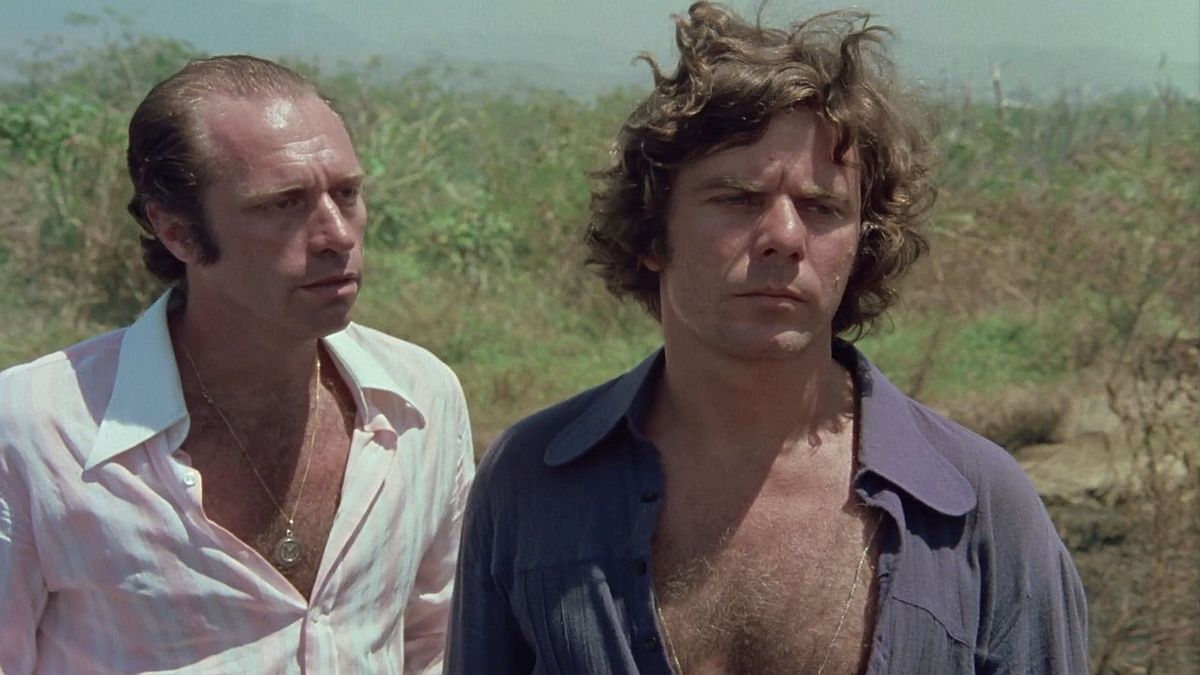
Lúcio Flávio (1977)
Lúcio Flávio
Original title: Lúcio Flávio, o Passageiro da Agonia
Lúcio Flávio is a noteworthy entry of Brazilian cinema, released during one of the most turbulent periods in the nation’s modern history.
The Esquadrão da Morte (“Death Squad”) was formed during the height of the Fifth Brazilian Republic, which was a military dictatorship in Brazil that came into power by a coup d’état in 1964 when the CIA-backed Brazilian Armed Forces overthrew the then democratically elected president João Goulart. The dictatorship lasted until 1985. The Esquadrão da Morte was a paramilitary organization composed largely of police officers who worked with the consent of the dictatorship, carrying out torture, extrajudicial killings, and systematic intimidation under the guise of combating crime.
Within this environment, groups of bandidos formed. Lúcio Flávio was the head of one such group. What makes his story stand out is that he was instrumental in uncovering and publicizing the ties between local police and the Death Squad. His testimony and public presence forced Brazilian society to confront the uncomfortable reality that the state itself was entangled in the violence it claimed to suppress. In this sense, Flávio is a historical figure occupying a complicated space. He could be compared in some ways to Jacques Mesrine of France, or Carlos the Jackal of Venezuela. Depending on the lens, figures such as these might be dismissed as criminals and terrorists or interpreted as spontaneous pockets of resistance in the face of authoritarian forces.
As for the film itself, the screenplay was based on the book of the same name by José Louzeiro, a Brazilian novelist, screenwriter and reporter. With its tight pacing, action sequences, and underlying tension, Lúcio Flávio makes for an engaging viewing experience. I also appreciated the references to Candomblé, the Afro-Brazilian spiritual tradition, and its connection here to resistance movements and the bonds that hold a community together.
Babenco’s interest in marginalized figures and institutional corruption would continue to shape his later work. Pixote (1980) delves into the lives of street children caught in cycles of exploitation, while Kiss of the Spider Woman (1985) explores repression, identity, and political imprisonment. Viewers drawn to this merging of social critique and human drama will find Lúcio Flávio an essential, if often overlooked, precursor that examines the contradictions of a society wrestling with its own shadows.