Short Night of Glass Dolls (1971)

Short Night of Glass Dolls
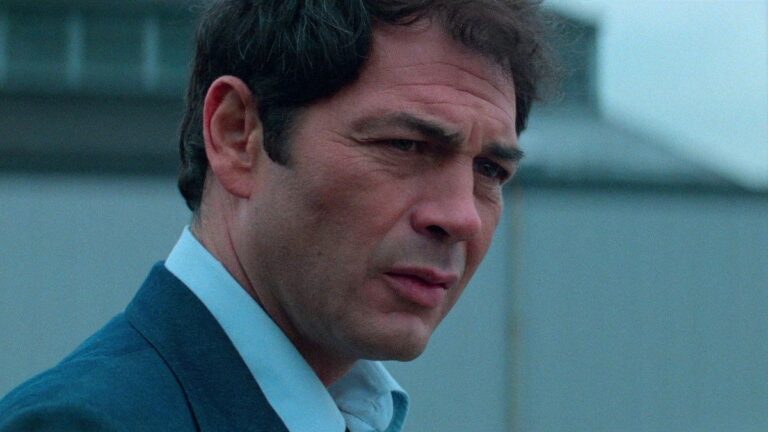
Aldo Lado’s directorial debut stands as one of giallo’s more psychologically unsettling entries, trading the genre’s typical bloodletting for creeping existential dread. The film follows American journalist Gregory Moore (Jean Sorel), found catatonic in a Prague park, presumed dead but horrifyingly conscious and unable to move or communicate. Through splintered flashbacks, we learn of his desperate search for his missing girlfriend Mira (Barbara Bach) and the sinister conspiracy he uncovers involving Prague’s elite and their occult rituals.
Where films like Bava’s Blood and Black Lace (1964) or Argento’s Deep Red (1975) revel in baroque murder set pieces and visceral shocks, Lado’s approach is deliberately suffocating. The film operates as an existential nightmare and a murder mystery. Gregory’s paralyzed state becomes a metaphor for helplessness against overwhelming institutional evil. This is giallo filtered through Kafka, where the true horror isn’t the killer’s blade but the protagonist’s complete powerlessness.
The pacing reflects this psychological torture. Short Night of Glass Dolls is undeniably a slow burn, eschewing the genre’s usual stylized kills for mounting paranoia and bureaucratic indifference. Viewers accustomed to gialli’s usual rhythms may find the deliberate tempo challenging, but Lado’s patience pays dividends. When the film finally reveals its conspirators and their grotesque beliefs, the impact hits with sickening force. The climax achieves a disturbing power that is more impactful than conventional shock tactics.
Ennio Morricone’s score proves essential to maintaining tension through the quieter stretches. Rather than overwhelming scenes with melodrama, Morricone creates an atmosphere of pervasive unease through discordant strings and unsettling vocal arrangements. Notably, he incorporates natural sounds such as heartbeats, breathing, and ambient noise that blur the line between score and sound design, intensifying Gregory’s claustrophobic perspective and our identification with his trapped consciousness.
Short Night of Glass Dolls won’t satisfy viewers seeking gialli’s usual forms, but for those willing to submit to its deliberate, psychological approach, it offers a tale that suggests true horror often lies not in what is done to the body, but in the mind’s complete isolation and the revelation of humanity’s casual cruelty.
Special mention: both Ingrid Thulin (known for her work with Ingmar Bergman) and Mario Adorf (who has played in many other gialli, as well as poliziotteschi films) both have supporting roles.
It was a special treat to have an opportunity to see this at the cinema. Plaza Theatre in Atlanta had a screening in conjunction with Cinematic Void out of Los Angeles and new-kid-on-the-block physical media label, Celluloid Dreams (that had a booth in the lobby with three titles they’ve released). I was happy to see a packed house on a Thursday night for a niche genre. Cult cinema is alive and well in 2026.