Sinners (2025)

Sinners
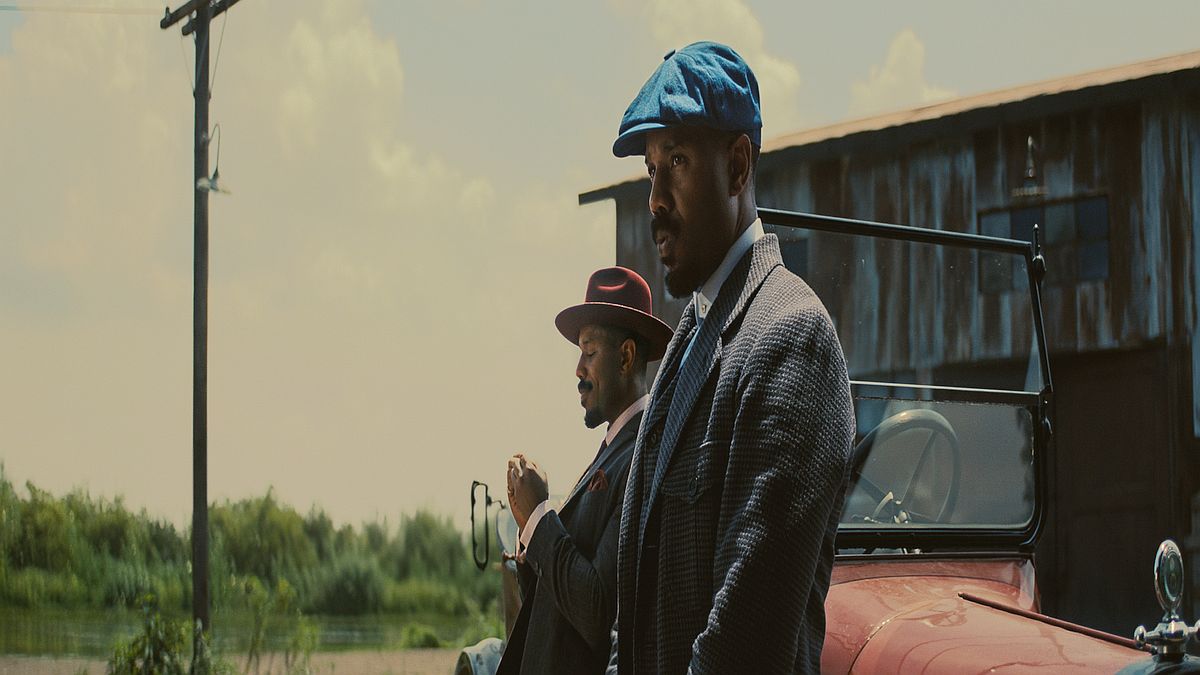
Michael B. Jordan plays both of the Smokestack Twins: Elijah “Smoke” and Elias “Stack” Moore. It’s 1932, and they are returning to their hometown in the Mississippi Delta after having spent several years in Chicago, where it is implied they built a reputation as gangsters, possibly even having dealings with Capone’s Chicago Outfit. They come back to town with fancy suits, wads of money, and a plan to open up a juke joint where the locals can have their own place to listen to music, dance, drink, and eat some good food. Yet they find themselves entangled in a rising, mysterious threat that forces them to confront both their past and a lurking evil.
Samuel “Preacherboy” Moore (Miles Caton), a young guitarist who idolizes his larger-than-life cousins, finds himself torn between his pastor father’s (Saul Williams) strict hopes for him and his own longing to become a bluesman. His music becomes a kind of spiritual crossroads, part inheritance, part rebellion, where he negotiates who he is allowed to be and who he feels called to become.
The film is steeped in history and lore that draws directly from the African American experience while also reaching toward something broader and more universal. The blues functions as both a cultural anchor and a metaphysical conduit, suggesting that music is not merely entertainment but a communal ritual with the power to bind people together, to heal, to remember, yet sometimes to open doors better left closed. The opening narration hints at this duality, describing how certain rhythms brush against the edges of the other world, how melody can be a balm or a beacon, but also a threshold through which darker forces might slip in.
One of the film’s most profound moments comes during the juke joint’s opening night. As Preacherboy plays, the room seems to dissolve into a visionary montage where timelines fold in on themselves. Figures appear in Yoruba regalia, Native American dress, ancient Chinese garments, 1970s funkadelic fashion, and modern hip-hop attire, all moving to the same pulse, all participating in the same ritual of sound and motion. The sequence suggests a kind of spiritual continuity across cultures and eras, a recognition that music and dance have always been the ways communities celebrate, mourn, resist, and transform. It’s a visual argument that the blues is both deeply rooted in a specific history and part of a much older, global lineage of expressive survival.
Smoke’s wife Annie (Wunmi Mosaku), brings a quiet but unmistakable current of hoodoo into the story, one that is not sensationalized as is often the case on screen, but a lived, everyday practice rooted in protection, intuition, and ancestral knowledge. She’s the kind of woman who reads a room before she enters it, who knows when the air has shifted, and who carries remedies and rituals the way others carry family heirlooms. Her connection to hoodoo isn’t portrayed as exotic or ominous; it’s a cultural inheritance, a survival technology, and a way of seeing the world that the men around her often overlook until it’s too late. Annie’s presence reflects the film’s larger exploration of music as a bridge between worlds. Where Preacherboy channels that liminal space through sound, Annie navigates it through charms, prayers, herbs, and the knowledge that the veil between the living and the unseen is thinner than most people admit. She senses the gathering darkness long before anyone else, and her hoodoo practice becomes another thread in the film’s tapestry of cultural memory, resistance, and spiritual power.
When the evils are finally confronted face-to-face, Sinners doesn’t opt for a painless conclusion. Not everyone makes it to safety; some characters fall in the attacks. And while there is ultimately a spirit of triumph and victory to the story, there is also a recognition that the real-life history being projected as metaphor entailed immense loss and suffering, trauma that is still felt today and has not been fully reconciled. Yet the dignity of the people who endured that history, and of their descendants, remains unbroken.
Bonus: Blues legend Buddy Guy appears in a brief epilogue set sixty years after the main events of the story.