The Female Animal (1958)
The Female Animal
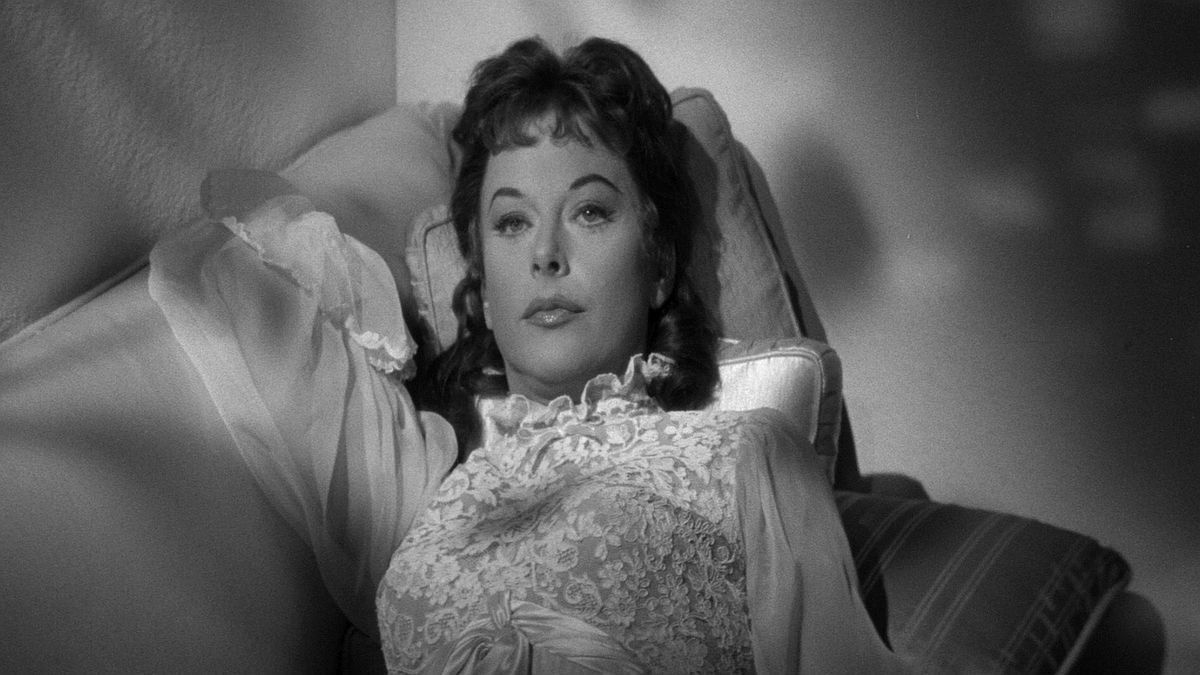
Hedy Lamarr plays Vanessa Windsor, a fading Hollywood star who becomes infatuated with a younger studio worker, Chris Farley (George Nader), after he saves her from being struck by a camera on set. As their romance takes shape, Chris begins to resent being a kept man. Things grow even more complicated when he meets Penny (Jane Powell), a young woman who turns out to be Vanessa’s adopted daughter, and who promptly falls for him herself. The film spins their love triangle into a melodrama about desire, insecurity, and the tensions created when personal longing collides with fame.
There were a few surprising scenes considering that the Hayes Code was still technically in effect, including an over-the-knee spanking sequence that leans heavily into kink territory, when Penny seduces Chris. Come to find out that producer Albert Zugsmith also wrote the story. Which might explain things as Zugsmith would go on to write and/or direct such exploitation films as Sex Kittens Go to College (1960), Confessions of an Opium Eater (1962), and Psychedelic Sexualis (1966). That’s not to say that The Female Animal is an exploitation film. Far from it. It’s an entangled love melodrama. But I guarantee it was Zugsmith who wrote the spanking scene into the picture.
The Female Animal is also notable for being Hedy Lamarr’s final film. She was only in her early 40s when the movie was released, and though she had a prolific career as an actor, appearing in over thirty movies beginning with her childhood debut in 1930, she gave up acting and in her later life became somewhat of a recluse.
Looking back, with the knowledge that this was her last movie, it becomes easy to see parallels between the character Vanessa Windsor and the person Hedy Lamarr. For example, an actor at the twilight of her career, one who started as a child and who expresses frustration about the type of work she is getting. Concerns about public image, acceptance, recognition. Additionally, the strained relationship with her own child. Lamarr’s real-life biography reflects many of these elements which play out on the screen as well. Obviously not one-for-one, but there is enough there that made me take note.
As a whole, The Female Animal stands as an unexpectedly revealing artifact, a subtle farewell to one of Hollywood’s most enigmatic stars. It may not be a great film, but watching it now, the emotional undercurrents feel inseparable from the story of the woman at its center.
Note: Despite being included in Kino Lorber’s Film Noir set, I wouldn’t classify this as a noir. I see it as a melodrama.