X (2022)

X
A modern slasher that wears its references on its sleeve, X invokes the classics of the genre without ever feeling like mere pastiche. Its thematic ambition, tonal precision, and character-driven storytelling give it a vitality that transcends imitation alone.
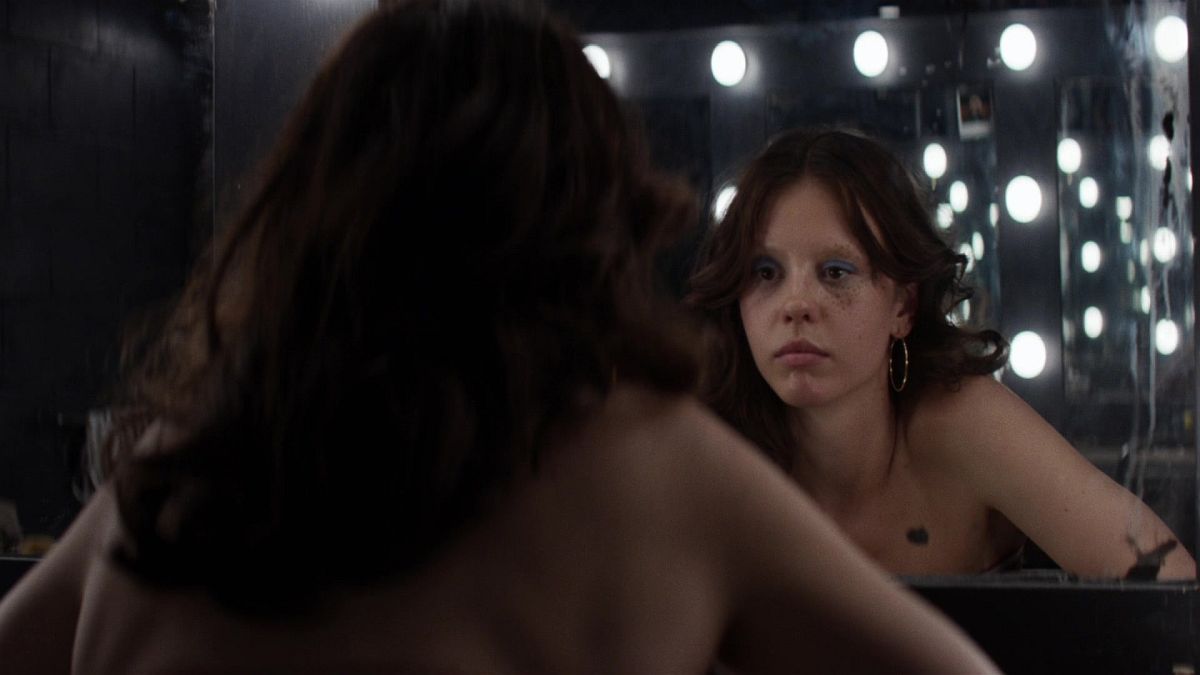
The porn-film subplot isn’t played for cheap laughs or pure titillation. It’s treated as a legitimate artistic pursuit while exploring the commodification of bodies and sexuality. For example, the scene where RJ films Maxine in the barn, coaching her through the porn shoot with the same seriousness he’d bring to an arthouse film. He frames Maxine with deliberate composition, making use of slow dolly ins, warm natural light, and careful blocking. RJ talks about “cinematic quality” and “elevating the genre,” treating the actors’ bodies as both artistic material and marketable product.
The tension between self-expression and exploitation is examined in the scene where Lorraine decides she wants to perform in the film, leading to the argument between RJ and the rest of the crew. Lorraine’s desire to participate is framed as an act of self‑assertion. She wants agency, experience, and creative involvement. RJ’s reaction exposes a double standard. He’s fine exploiting others’ bodies for his “vision,” but recoils when the same logic applies to someone he cares about. The scene lays bare the blurred line between empowerment and exploitation in sex work and filmmaking more broadly. Who gets to express themselves, who gets used, and how the same act can be liberating for one person and violating for another.
If the younger characters treat their bodies as currency or creative expression, Pearl reveals the darker inverse. What happens when that currency runs out? The film’s most haunting thread is its exploration of aging and the terror of becoming invisible. Pearl embodies a lifetime of desire soured by neglect, a woman who once longed to be seen, now trapped in a body that no longer grants her the attention she craves.
This comes into focus in the scene where Pearl reaches out to touch Maxine while she sleeps. Maxine’s horrified recoil isn’t just fear of danger; it’s fear of what Pearl represents. In Pearl, she glimpses a future in which beauty fades, desire goes unanswered, and the world stops looking. The moment is unsettling not because Pearl is monstrous, but because her longing is painfully human. In that moment, X frames aging as a kind of social disappearance, a loss of identity, mirroring Maxine and Perl’s relative life cycles. One is at the beginning of her path to fight for her dreams, the other at the end of hers, suggesting that the real horror isn’t aging itself, but the erasure that comes with it.