Blackwater (1983)
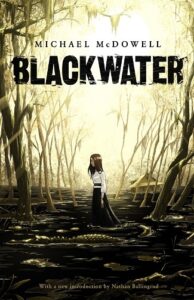
Blackwater
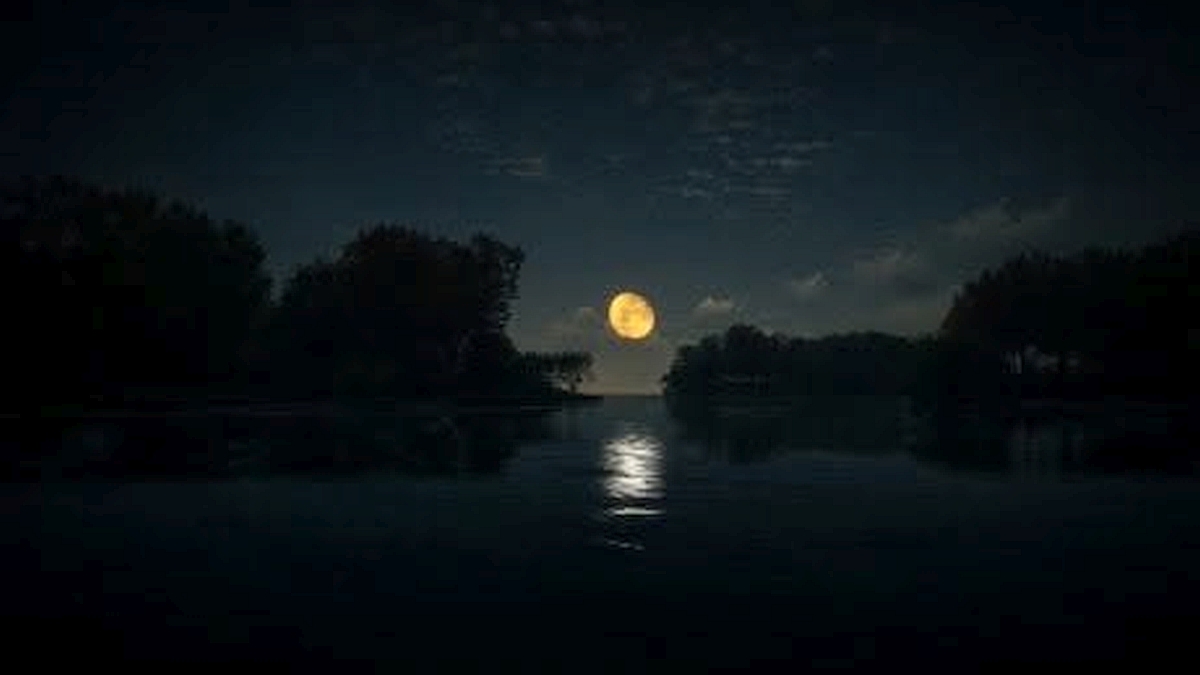
Whatever it was, whatever waited on the murky riverbed for unlucky swimmers, whatever crawled up the clayey banks on dark nights; whatever that thing was, Ivey had assured her brother, it had been there before Perdido was built, and it would be there when Perdido was no more.
This is the omnibus edition published by Valancourt Books in 2017, collecting all six installments of the original serial novel into one volume:
– The Flood
– The Levee
– The House
– The War
– The Fortune
– Rain
Blackwater opens in 1919, as a catastrophic flood washes over the small town of Perdido, Alabama, where the Perdido and Blackwater rivers meet. In the wake of the flood, the Caskey family discovers a mysterious woman, Elinor Dammert, stranded in the wreckage of the town’s hotel. Elinor is taken in, and her integration into the Caskey household sets the stage for everything that follows. Over the ensuing decades, the saga follows the Caskeys as they build a lumber empire, navigate marriages and rivalries, weather the Depression and a world war, and contend with a town that is inseparable from the dark river that runs through it. Family loyalty, ambition, and inheritance drive most of the drama, while something altogether stranger moves underneath it.
What an absolute pleasure this was to read. The best way I can categorize Blackwater is as a Southern Gothic, multigenerational family saga with horror elements. I was totally taken in by the small-town drama of the Caskeys and the other inhabitants of Perdido. Though there is a large cast of characters, I was easily able to distinguish between them, thanks to McDowell’s skill in writing each one with memorable motivations and traits .
The dialogue felt authentic for the time (early-to-mid 20th century) and place (rural Alabama). The descriptions of the environment were evocative, making both the town and the river feel like characters themselves.
The story was compelling. The horror elements, while certainly present, were subtly woven into the family and town politics that form the main focus of the narrative. This felt like something along the lines of classic ghost stories mixed with Lovecraftian dread. One of the things that stood out to me about the series was that the explicitly horrific events were few and far between, yet the tension of the horror was an ever-present force, an eerie menace holding sway over the town and its people. Occasionally the horror would burst forth into open appearance, only to settle back down into the day-to-day drama, which was now altered in the aftermath. This cycle repeated periodically over the course of about fifty years, and through it, we see how the town and its families were shaped by this force.
Blackwater was my introduction to McDowell as a novelist, though not as a writer altogether. He’s perhaps best known to most people as a screenwriter. He wrote the original screenplay for Tim Burton’s Beetlejuice (1988), later contributed an early draft for The Nightmare Before Christmas (1993), and also wrote the screenplay for Thinner (1996), adapted from Stephen King’s novel. He also wrote for horror TV anthologies, contributing extensively to Tales from the Darkside as well as episodes of Tales from the Crypt and Monsters.
More of his books have gone straight onto my to-be-read list. I have my sights on Gilded Needles (1980) and The Elementals (1981). I wish I had discovered him earlier in my reading journey, yet — as the saying goes — better late than never.