The Hunter (1962)
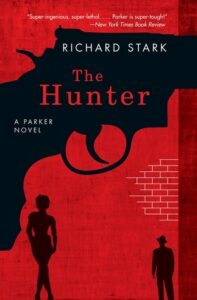
The Hunter
This is the first of the Parker novels. Written by Donald E. Westlake under the pen name Richard Stark and first published in 1962. Super gritty. Parker is like the anti-Marlowe. Whereas Marlowe is a private investigator, Parker is a professional thief. Whereas Marlowe might sometimes bend the rules to solve the case, Parker will kill for revenge or profit. Whereas Marlowe might philosophize about life, Parker doesn’t have time for such things.
Westlake went on to write twenty-three more Parker novels after The Hunter, up through 2008, the year he died. This is where it all began.
At its core, The Hunter is a revenge story stripped down to its essentials. The plot is simple by design. Parker is double-crossed during a job, left for dead, and robbed of the money that was rightfully his. The novel follows his relentless pursuit to get it back. That’s the whole driving force behind the book. No twists, no philosophical detours, no sentimental flashbacks. Just Parker moving through a criminal underworld with the single-minded purpose of reclaiming what he’s owed. Westlake’s brilliance is how he turns that simplicity into an engaging story. Every chapter feels like a step forward, and every interaction a test of Parker’s resolve. The book is lean, brutal, and efficient, much like its protagonist.
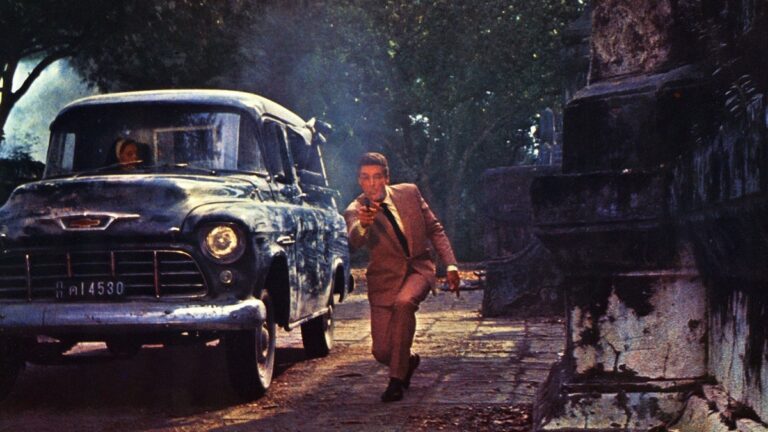
The story was first adapted into a film in 1967 as Point Blank, directed by John Boorman and starring Lee Marvin. It’s interesting to see how the movie reframes the source material. Boorman takes Westlake’s bare-metal crime novel and turns it into a dreamlike, psychedelic meditation on memory and perception. Where the book is all straight-forward action, the film is fractured, highly stylized, and enigmatic. Marvin’s character, who is renamed Walker, is still on a mission to get his money back, but the movie changes that mission into something more contemplative. You’re never entirely sure whether Walker is alive, dead, hallucinating, or trapped in a purgatorial loop. It’s a bold interpretation that is very different from Westlake’s book.
Seeing the movie after reading the book drives home just how malleable crime fiction can be. On the page, Parker is not a symbol. He’s a working professional with a code, a set of skills, and an unrelenting drive to accomplish his task. He doesn’t question. He acts. And that action defines him far more clearly than any reflective monologue ever could. Boorman’s film, on the other hand, takes that same basic setup and builds something entirely different around it. Lee Marvin’s Walker feels like a haunted presence moving through a surreal world. The core elements of the story are the same, but the film transforms them into an existential puzzle, where Westlake’s novel keeps everything grounded and direct.
Both versions have their strengths, but the novel remains the purest expression of Parker’s character. It’s the beginning of a long-running series, that, even after all these years, still hits as hard as a clenched fist.