The Unknown (1927)
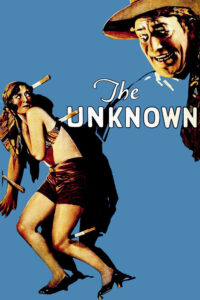
The Unknown
Tod Browning’s silent film The Unknown is a psychological thriller about obsession, deception, and the fanatical lengths a person can go when consumed by selfish desire.
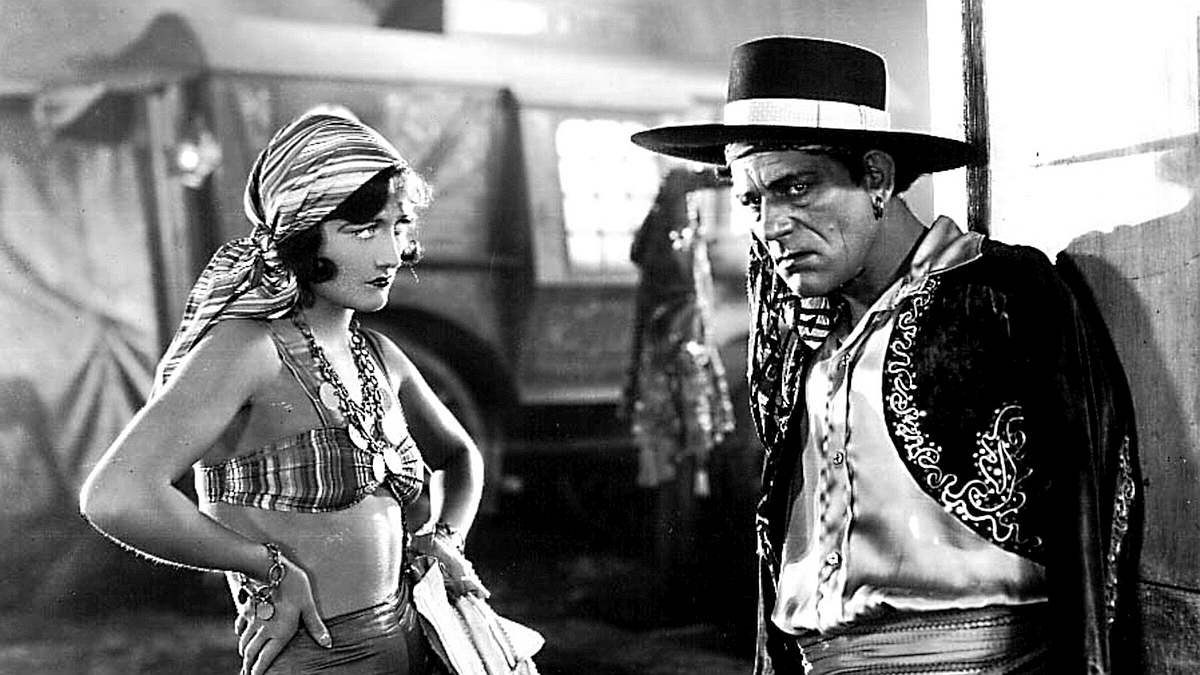
It stars Lon Chaney (Sr.) as Alonzo the Armless, whose circus act includes throwing knives and firing a rifle with his feet at Nanon, the daughter of the circus owner. Nanon is played by a young Joan Crawford, who, even at this early stage of her career, displays a magnetic screen presence.
Malabar the Mighty (Norman Kerry) is the circus strongman. He has fallen in love with Nanon, yet every time he makes a pass at her, she recoils from his touch. Nanon has had enough of men trying to put their hands on her (who can blame her?). This draws her closer to Alonzo. He is safe. Since he is armless, she doesn’t have to worry about him trying to touch her. But Alonzo has some secrets of his own, and this is what sets the story in motion.
Chaney’s performance is a showcase of expressiveness. Watching these silent era films makes me think of how they were just one step away from live theater. Without sound, the actors had to broadcast their emotions through their gestures, body language, and facial expressions. What might be considered overacting in a modern movie was necessary during the silent film era. It worked for me, and while all the characters were great, Chaney was the standout example of this.
Crawford was excellent as well, exemplifying a proto-feminist assertion of bodily autonomy. Her aversion is not played as an irrational quirk but as a trauma response. The film treats it with a seriousness unusual for the period. My interpretation is that this was an early exploration of consent, what it means to be touched, to set boundaries, and to have those boundaries violated. Thinking about the time period, The Unknown came out in 1927. The 19th Amendment to the US Constitution, which granted women the right to vote, had only been ratified 7 years prior. While the story doesn’t completely hold up to modern notions of feminism (it can still be read as a narrative about which guy gets the girl), it does explore themes of consent and bodily autonomy that wouldn’t become mainstream until decades later, during the Second Wave feminism of the 1960s and 1970s.
All in all, the film is a masterful mix of melodrama, horror, and psychological insight. Nearly a century later, it still has the power to provoke a response, and to ask questions society is still wrestling with today.